My compositional practice explores the translation of visual, spatial and data-driven structures into music. I use systems found in everyday environments, objects, and artworks as frameworks for generating musical material, allowing their inherent patterns, relationships, and movements to shape pitch, rhythm, and harmony. Through this process, familiar structures—whether a transport network, a mechanical puzzle or an abstract painting—are transformed into evolving musical forms. My work explores the space between systems and expression, using processes of mapping, transformation and interpretation to uncover unexpected musical relationships within the structures that surround us.
Musical Underground
About
Musical Underground was created through compiling and translating data from TFL’s Underground maps into a musical work. Information including sea level, travel zones, station and platform depths, interchanges, and walking distances between stations was used to determine pitches and note lengths. The result is a musical interpretation of London’s intricate underground network
Compiling the Data
TfL provides a range of maps of the London Underground system. Alongside the familiar Tube map, there are maps showing the network’s tunnels and the average walking times between stations. These data sources informed both the sound and structure of the piece.
As you listen, two contrasting sounds distinguish the journey’s environment: a brighter sound indicates the train is above ground, while a more muffled sound indicates travel through a tunnel. Walking distances determine note length, meaning that stations in central London, where stops are closer together, produce shorter time intervals between pitches, while stations in the outer zones are spaced further apart.
Pitch is determined by several factors. Each travel zone is assigned a specific musical mode, with sea level represented by the mode’s tonic. The pitches of the individual stations and platforms are calculated from their distance, in metres, above or below sea level and then converted into musical distance from the tonic. Data on station and platform levels were drawn from Daniel Silva’s work, which presents detailed infographics of station and platform information for every Underground line.
Once each station and platform had been assigned a pitch, the piece was then structured around the train timetables. Where there is no interchange, only the platform level is heard. At interchange stations, both the platform and station levels are played. Together, the music represents the first train on every route across each Underground line. Staggered according to the timetable, the piece creates a musical snapshot of the London Underground at the beginning of a typical weekday morning.
All data was sourced from TfL in 2019 – some aspects may have changed since then.
Score Excerpt
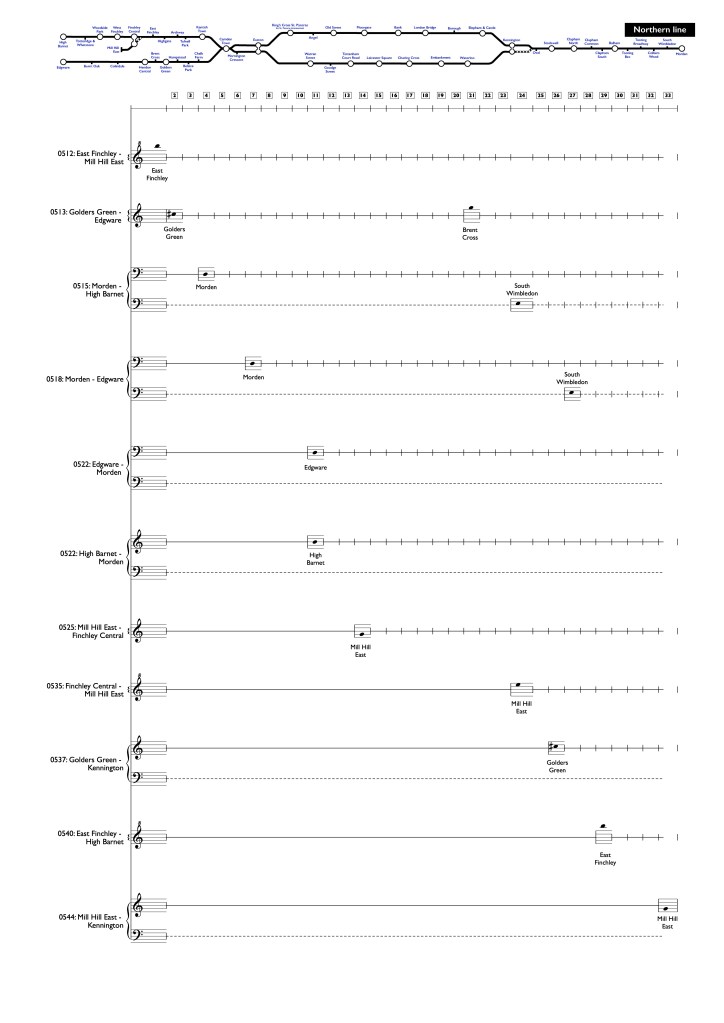
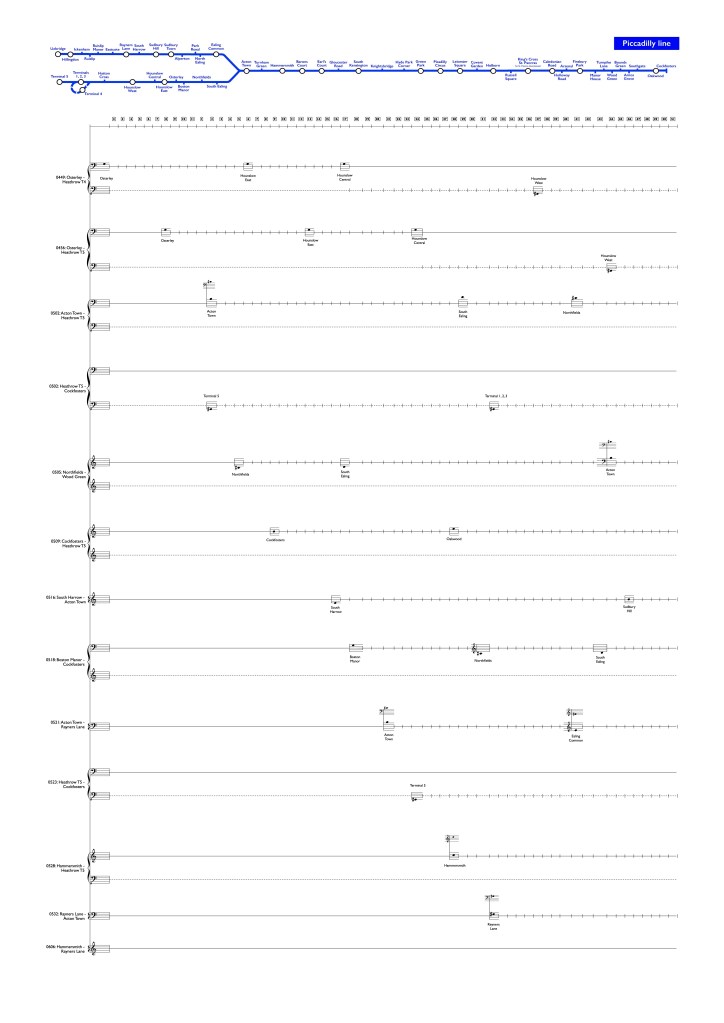
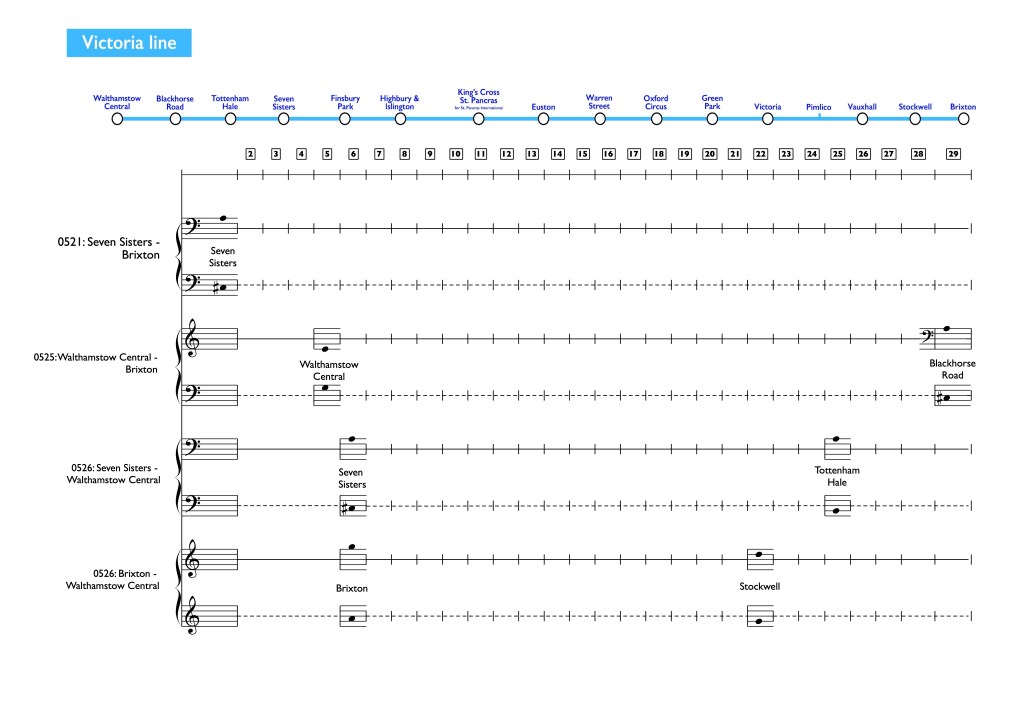
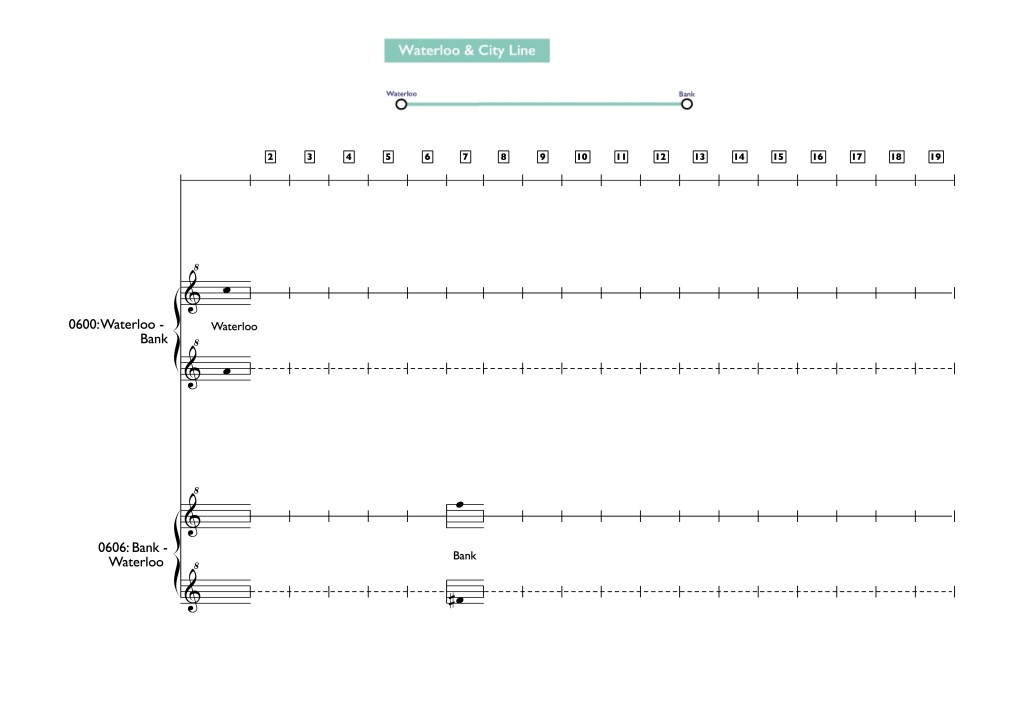
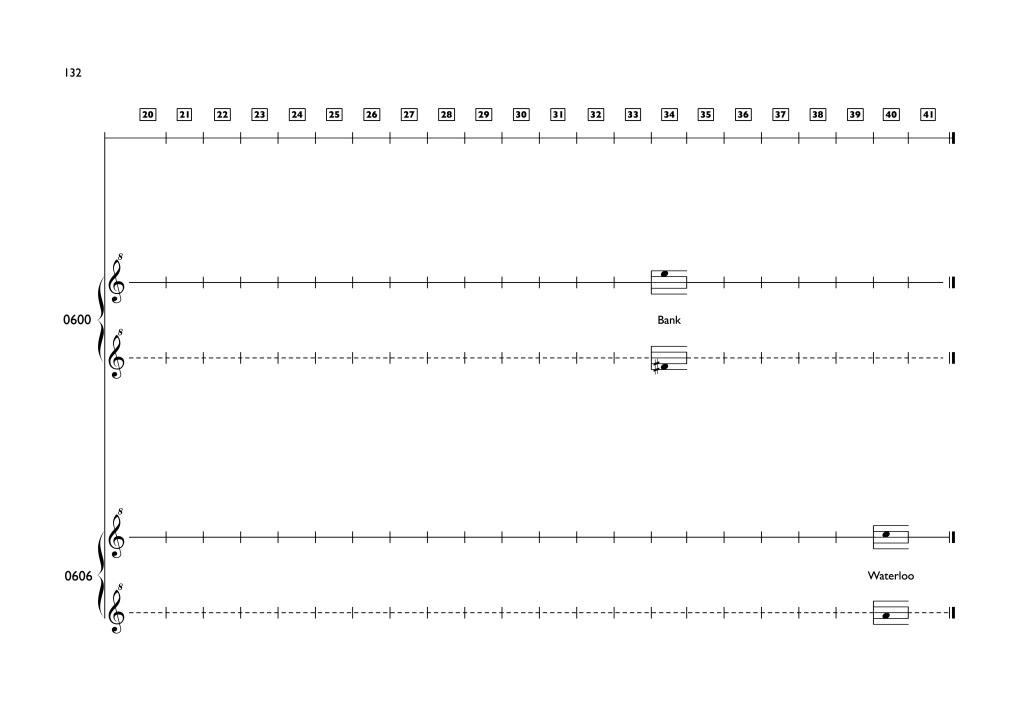
The scores were created after the data and visual elements had been mapped and animated. Each station is marked, with every bar representing one minute of walking time. The individual routes are then staggered to reflect the train timetables.
In the score, solid lines indicate sections where the route is above ground, while dashed lines represent travel through an underground tunnel.
Rubiks
About
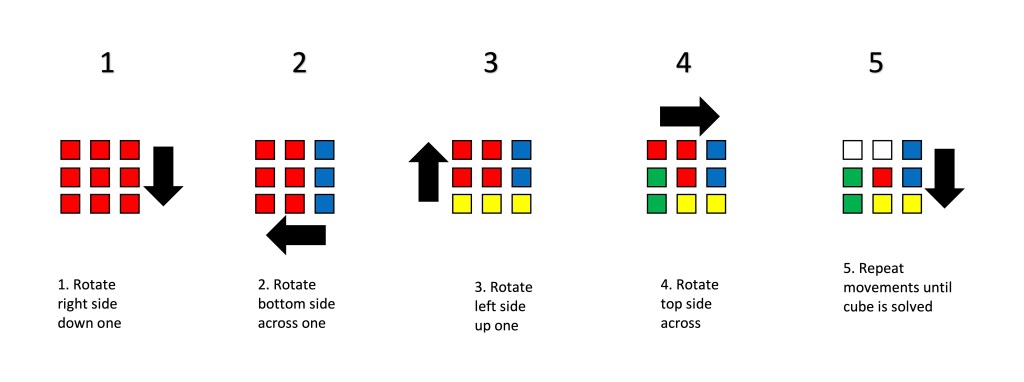
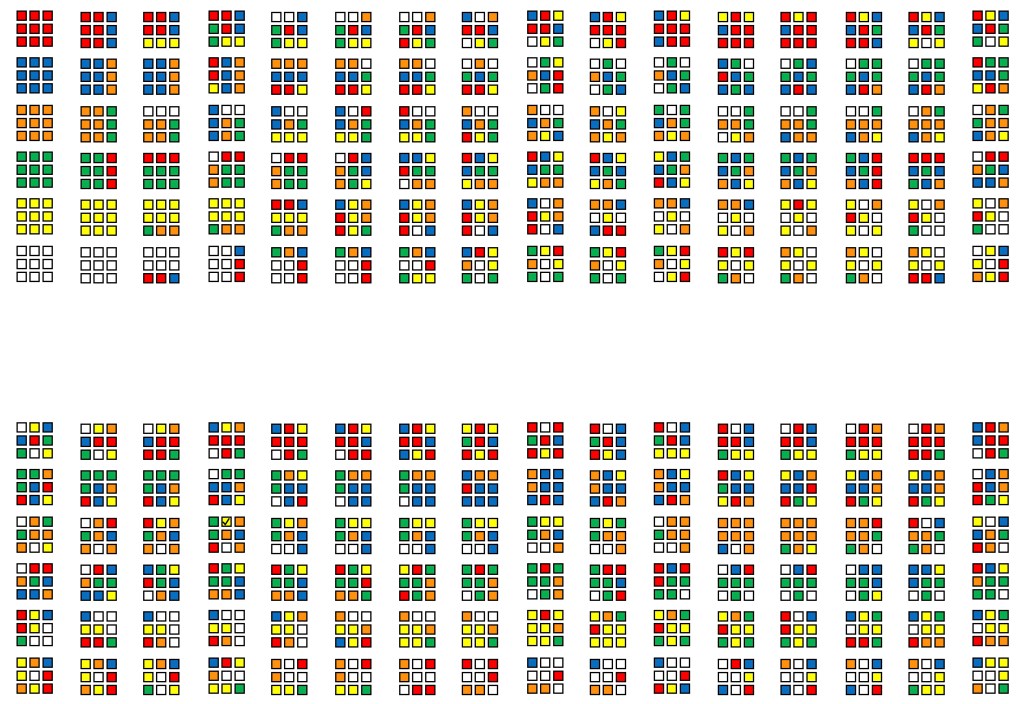
A Sound Art piece that recreates the movements of the Rubik’s Cube. The puzzle distorts and resolves through the movements of the faces, which creates harmonic discord and resolution. To create the work, each colour of the cube has been assigned a pitch, and each face has been assigned an octave range. The frequencies of each colour on each face through each sequence are charted to create a rotating soundscape.
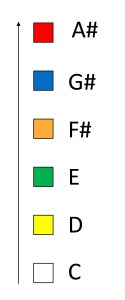
Each coloured box is a reference to a particular pitch class derived from the whole-tone scale starting on C.
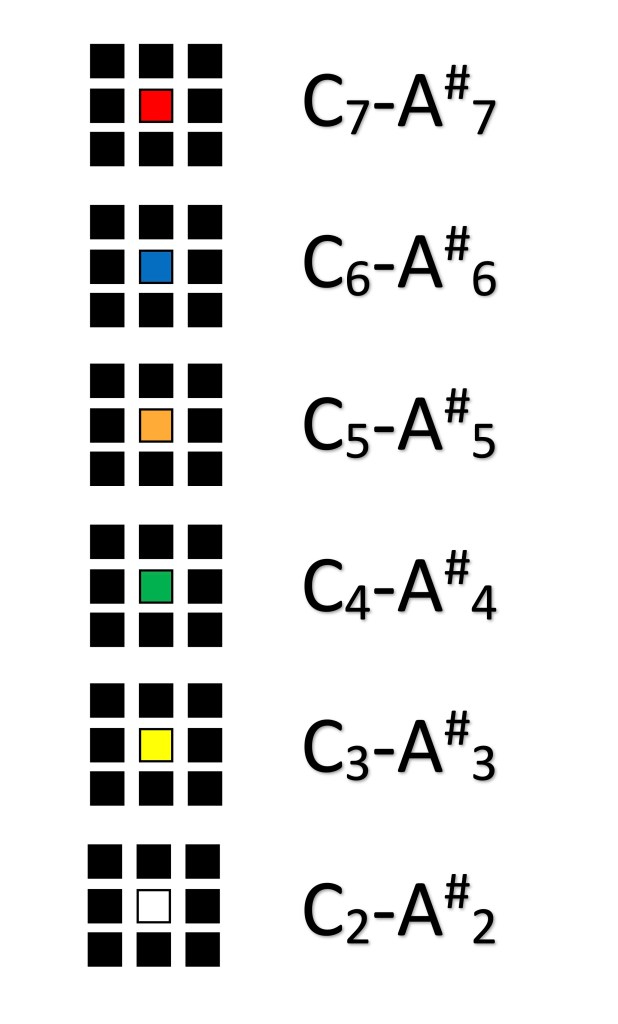
Each face of the cube is a reference to a specific octave range.
As each side rotates, the centre square stays the same, so as to not change and disorientate the octave reference. As the different colours/pitches are rotated around the cube, their frequency changes in correspondence to the octave/side that they are on. The piece moves in charted rotations until the cube is solved.
Rotation Sequence
Score Excerpt
Composition in Line
About
Inspired by Piet Mondrian’s Composition in Line, this piece transforms visual geometry into sound. The painting’s horizontal and vertical lines are mapped onto MIDI notes, turning spatial relationships into pitch and musical structure. The work explores how a visual composition can be translated into an audible one.
Initial Developments
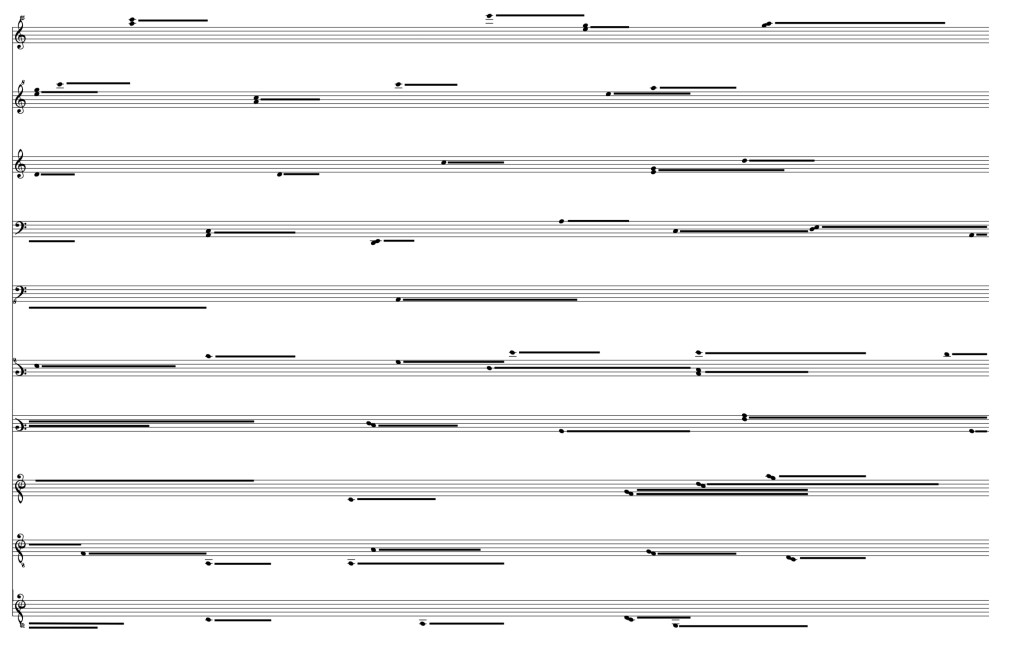
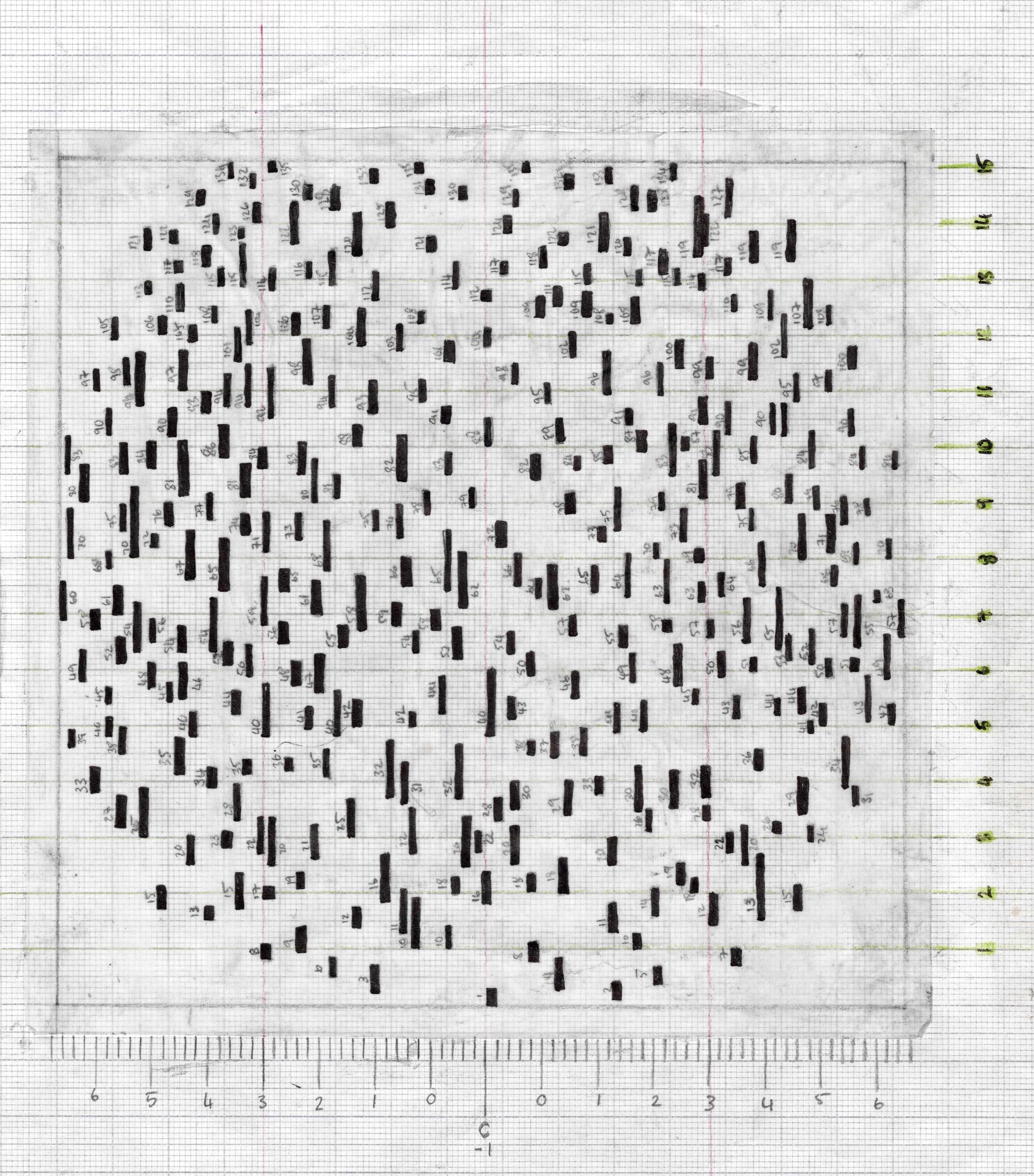
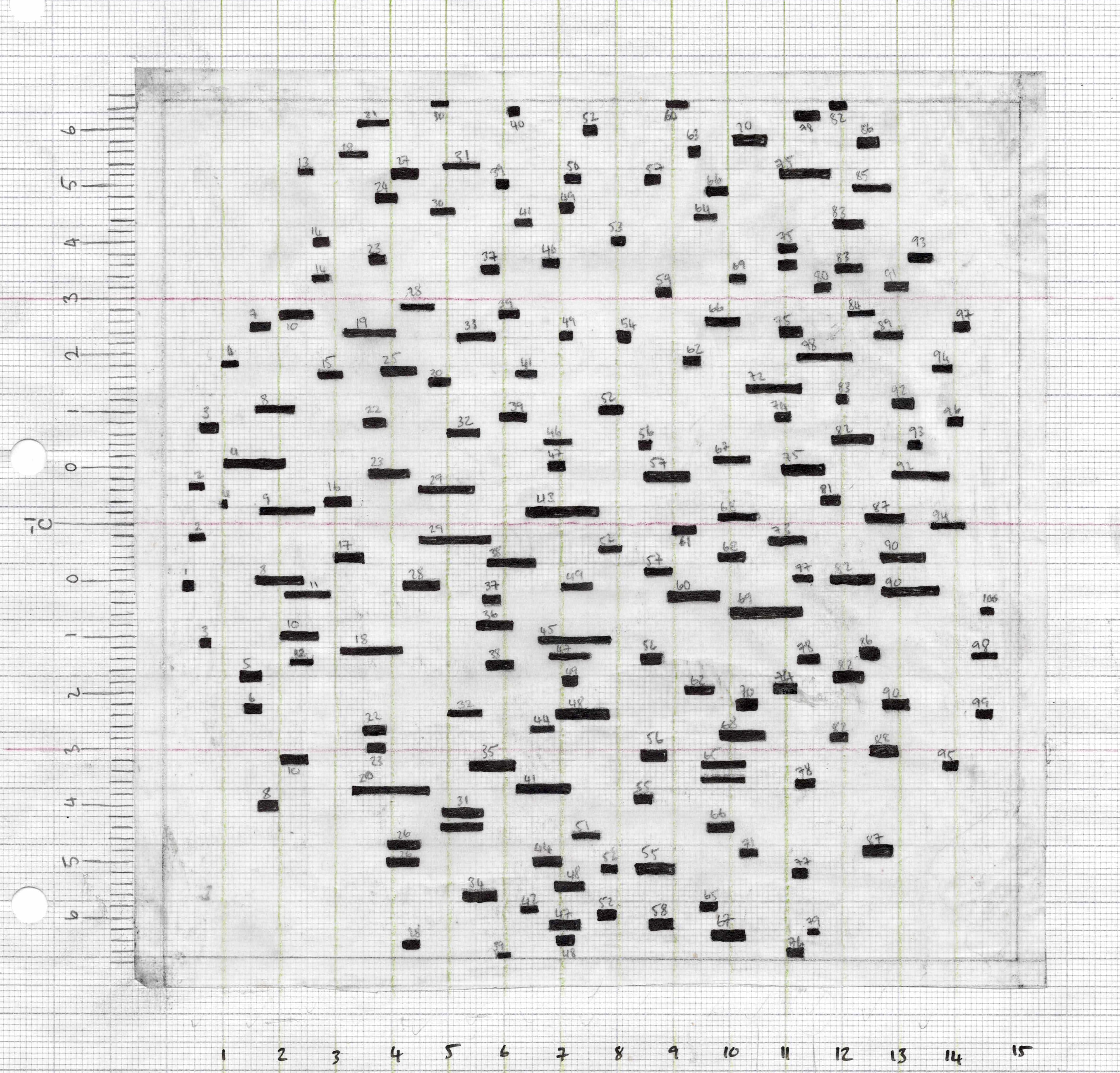
At the beginning of the compositional process, the painting’s content was divided into lines along the vertical and horizontal axes. Their lengths and positions were then charted against a grid, which determined their pitch and note length. The pitches of the work are plotted using a central line of symmetry. This line is the lowest musical register, with pitches gradually moving into the higher registers the further they are from this central line.
Score Excerpt
Measuring and inputting the MIDI information and animating the score were the initial steps, with the score being the last thing created. The score reflects the line of symmetry used to assign pitches in its structure. The clefs and registers are mirrored on either side to match the ordering of the MIDI notes and Mondrian’s composition.